
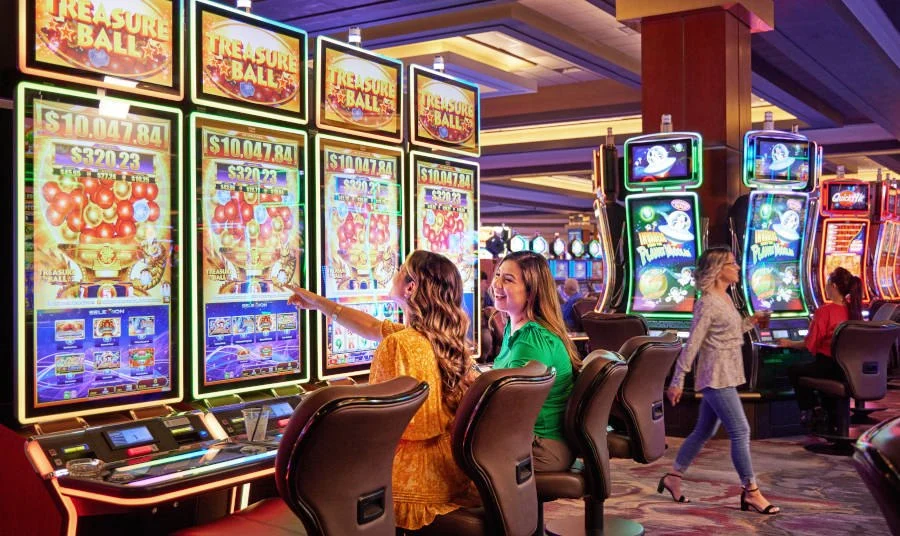
Digital slot games are among the most recognizable forms of online gaming. Over the years, they have evolved from simple three-reel machines into sophisticated digital experiences featuring high-quality graphics, immersive sound effects, and interactive gameplay. While many people are familiar with the spinning reels and colorful symbols, fewer understand the technology that powers these microslot games behind the scenes.
From Mechanical Machines to Digital Entertainment
The earliest slot machines were entirely mechanical. Players pulled a physical lever that set spinning reels in motion, and the final arrangement of symbols determined the outcome. These machines relied on gears, springs, and mechanical stops to produce results.
As electronics became more advanced, manufacturers replaced mechanical systems with computer-controlled hardware. Eventually, internet technology enabled slot-style games to move online, where software replaced physical components altogether. Today’s digital slot games are designed using modern programming languages and graphics engines, allowing developers to create far more complex experiences than traditional machines ever could.
The Role of Random Number Generators (RNGs)
One of the most important technologies used in digital slot games is the Random Number Generator, commonly known as an RNG.
An RNG continuously generates large sequences of numbers every second, even when no one is actively playing. The moment a player starts a spin, the game uses one of those randomly generated numbers to determine the result.
Key characteristics of RNG systems include:
- Every spin is independent.
- Previous results do not influence future outcomes.
- There is no predictable pattern that players can use.
- The outcome is determined instantly when the spin begins.
Because each result is generated independently, winning or losing streaks can occur purely by chance.
Understanding Return to Player (RTP)
Another common term associated with slot games is Return to Player (RTP).
RTP is a theoretical percentage that estimates how much of the total money wagered would be returned to players over a very large number of spins. For example, a game with a 96% RTP theoretically returns 96 units for every 100 units wagered over the long term.
It is important to understand that RTP does not predict individual results. A player may experience outcomes that differ significantly from the theoretical percentage during any single session.
Volatility Explained
Volatility describes how frequently and how significantly payouts may occur.
Games are often described as:
Low Volatility
These games tend to produce smaller payouts more frequently.
Medium Volatility
These balance the frequency and size of payouts.
High Volatility
These games may produce fewer winning combinations but can occasionally generate larger payouts.
Volatility affects the overall playing experience but does not change the randomness of individual outcomes.
Visual Design and Animation
Modern slot games place strong emphasis on visual presentation.
Developers create:
- Detailed backgrounds
- Animated characters
- Smooth transitions
- Special visual effects
- Themed symbols
- Interactive bonus scenes
Advances in graphics technology allow developers to produce games that feel more like animated stories than traditional slot machines.
Sound and Music
Audio contributes significantly to player engagement.
Developers typically include:
- Background music that matches the game’s theme
- Sound effects for spinning reels
- Audio cues for game events
- Celebration sounds for notable outcomes
Players usually have the option to adjust or mute audio according to their preferences.
Mobile Optimization
Many players now access games using smartphones or tablets. Developers therefore build games with responsive layouts that adapt automatically to different screen sizes.
Mobile optimization often includes:
- Touch-friendly controls
- Fast loading times
- Responsive interfaces
- Battery-efficient performance
- Smooth gameplay across operating systems
This allows a consistent experience regardless of device type.
Modern Development Technologies
Many digital slot games are built using technologies such as HTML5, JavaScript, and modern graphics frameworks. These technologies allow games to run directly in web browsers without requiring additional plugins.
Advantages include:
- Cross-platform compatibility
- Faster updates
- Improved security
- Better performance
- Reduced installation requirements
As browsers and mobile devices continue to improve, developers can introduce increasingly sophisticated features while maintaining accessibility.
User Interface Design
Good interface design helps players understand the game quickly.
Important interface elements include:
- Clearly labeled buttons
- Accessible settings
- Readable text
- Visible game information
- Intuitive navigation
A well-designed interface reduces confusion and creates a smoother user experience.
Fairness and Independent Testing
In many regulated markets, game software is independently tested to verify that RNG systems operate as intended. Testing organizations evaluate whether outcomes are statistically random and whether the software performs according to its published specifications.
Such testing helps increase transparency and confidence in the integrity of game mechanics.
Responsible Gambling
Because many digital slot games involve real-money gambling, responsible participation is essential.
Good habits include:
- Setting a personal spending limit before playing.
- Taking regular breaks.
- Avoiding attempts to recover losses by continuing to play.
- Viewing gambling as entertainment rather than a way to earn money.
- Seeking support if gambling begins to affect finances, work, or personal relationships.
Recognizing these principles can help reduce the risk of gambling-related harm.
The Future of Digital Slot Games
Technology continues to shape the future of digital entertainment. Developers are exploring improvements such as:
- More detailed graphics
- Enhanced accessibility features
- Faster loading technology
- Improved mobile performance
- Interactive storytelling elements
- Cloud-based game delivery
These innovations are expected to make future games more immersive while remaining accessible across a wide range of devices.
Conclusion
Digital slot games combine mathematics, software engineering, visual design, and user experience into a single interactive product. Technologies such as Random Number Generators, responsive web development, and modern graphics engines have transformed simple mechanical machines into sophisticated digital experiences.
Understanding how these games work helps players appreciate the technology behind them while recognizing the importance of randomness and responsible gambling. Whether viewed from a technical perspective or as a form of entertainment, digital slot games provide an interesting example of how software continues to reshape interactive media.