
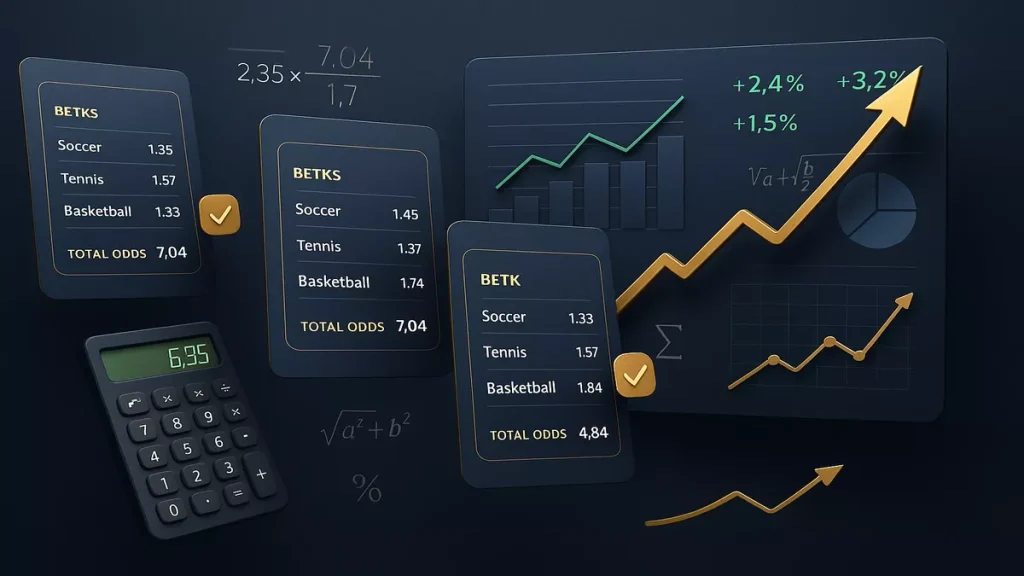
Combining Serie A fixtures with matches from other leagues in a multi-leg accumulator offers higher potential returns, but also exposes bettors to complex risk interactions. Balance becomes the defining skill—constructing a ticket where each leg serves a clear probability function rather than just filling space. During the 2020/2021 season, the contrast between Serie A’s tactical predictability and other European leagues’ volatility provided unique conditions for constructing structured combination bets rather than speculative stacks.
Why Balancing Across Leagues Matters
Each football league carries a statistical personality. Serie A’s cautious tempo contrasts with the Premier League’s pace or the Bundesliga’s goal saturation. Mixing them in one ticket requires weight distribution, not random inclusion. Bettors who understand variance patterns can design tickets where stable leagues anchor volatility-driven legs. This synthesis turns diversity into controlled exposure rather than chaos.
Serie A as the Probability Anchor
During 2020/2021, Serie A demonstrated data predictability—steady tactical structures, consistent scoring trends, and precise xG correlation. It made the league ideal as the anchor for accumulator frameworks. By using Serie A matches to stabilize probability, bettors reduce stochastic influence caused by leagues prone to late-game disruptions. Structured accumulators thus use Italy’s methodical rhythm to offset risk from high-scoring environments elsewhere.
Mechanism of Balancing Different Leagues
When Balance Protects Expected Value
The sequencing of matches reflects correlation strength. When multiple high-volatility leagues are included together, the cumulative variance increases exponentially. A balanced accumulator instead pairs one or two steady-match legs with controlled high-risk selections. Stability preserves expected value—the mechanism ensures partial probability overlap is mitigated, preserving profit potential even with minor deviation in outcomes.
Example of League-Level Probability Weighting
To illustrate proportional inclusion of Serie A in a balanced accumulator:
| League | Style Stability | Typical Goal Variance | Best Function in Ticket |
| Serie A | High | Moderate | Base anchor leg |
| Premier League | Medium | High | Controlled risk leg |
| Bundesliga | Low | Very high | Momentum leg |
| Ligue 1 | Medium | Moderate | Complementary support leg |
This weighting model suggests bettors treat Serie A as structure, then add higher-variance leagues to chase reward within defined tolerance.
Strategic Value of Accumulator Diversification
Diversification works only when intentionally asymmetric. Equal weighting across unpredictable leagues dilutes advantage. A better approach is functional balance—pairing high xG leagues with low volatility leagues to normalize ticket variance. Rather than increasing legs randomly, the bettor analyzes the proportional measure of unpredictability per selection. The balance principle is mathematical, not emotional—it seeks smooth expected return curves rather than amplified payout illusions.
Blending Analytical Control with Betting Execution
Under situational conditions, integrating informed betting through a sports betting service enhances control over mixed-league accumulators. These systems track live market movement, offering direct insight into cross-league volatility correlation. For instance, when integrating data visualization and probability evolution across fixtures, analytical platforms such as ufa168 เข้าสู่ระบบ provide interactive layers for constructing accumulators with probability thresholds rather than blind optimism. Bettors use its structural interface to test combinations, observing where expected value shifts as additional legs are added. This transforms the multi-league ticket from a gamble into a designed probability model.
Why casino online Illustrates Risk Aggregation Logic
In contrast, environments centered on probability-driven games—most notably casino online ecosystems—demonstrate identical variance behavior under different framing. The logic of accumulator balancing mirrors principles of portfolio construction inside game models. Each spin or hand carries independent odds, yet long-term exposure compiles systemic variance, replicating multi-leg ticket mathematics. Recognizing this symmetry refines betting discipline: the player isn’t chasing luck but managing accumulated probability. Those who understand risk aggregation treat uncertainty as architecture, not accident.
Common Structural Mistakes in Mixing Leagues
New bettors frequently misunderstand cross-league inclusion by mistaking diversity for safety. The following tendencies compromise balance:
- Combining multiple high-scoring leagues with correlated volatility.
- Ignoring fixture density and rotation differentials between leagues.
- Overweighting one matchday cluster leading to schedule dependency.
- Treating goal count assumptions as interchangeable across contexts.
True balance requires inter-league understanding, not numeric equality. Strategic asymmetry—knowing where to reduce or expand inclusion—remains the practical core.
When and Why Accumulators Fail
Failure typically comes from correlation misjudgment. If multiple leagues experience concurrent unpredictability due to weather, fixture congestion, or pandemic-related lineup variance, compounded failure emerges. Successful practitioners mitigate these cross-league shocks by prioritizing leagues with stronger regression data or consistent tactical anchors. Serie A’s stability during 2020/2021 often saved accumulator tickets that otherwise collapsed under external volatility.
Summary
Balancing Serie A 2020/2021 with other leagues inside an accumulator bet transforms random selection into structured risk architecture. The league’s tactical predictability provided the statistical spine, while inclusion of higher-variance competitions expanded reward potential under controlled exposure. Understanding cross-league variance, sequencing, and expected value allowed bettors to convert diversity into defensible strategy. In balanced construction, each leg serves a purpose—the mark of rational betting beyond mere chance.