
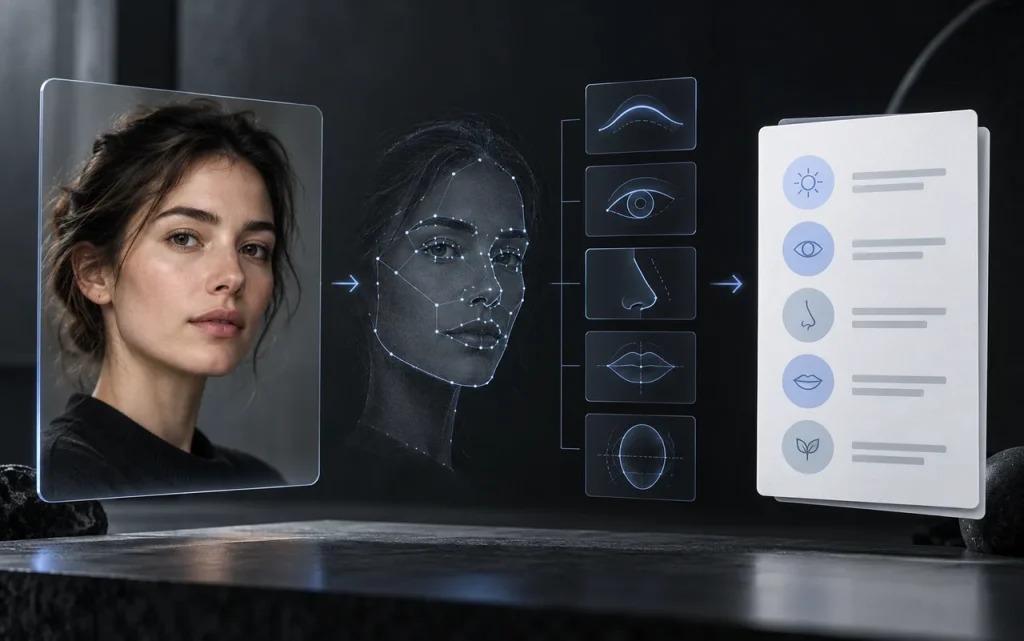
When a live stream host goes on camera to deliver a keynote speech or an interactive broadcast, the margin for visual error is remarkably thin. Applying a face rating ai assessment helps resolve problems that are not a lack of general camera equipment or high-resolution webcams, but rather the failure to analyze how subtle asymmetries, awkward tilt angles, and unbalanced framing affect audience trust during the first crucial minutes of speech delivery. Viewers form immediate impressions based on facial balance and eye-level alignment long before they process the spoken content. For professional streamers, maintaining a polished, authoritative visual presence requires more than guesswork; it demands a structured approach to self-evaluation. By utilizing specialized tools like face rating ai, creators can transition from trial-and-error camera adjustments to a data-informed pre-stream workflow, where every face rating ai check confirms optimal composition.
Analyzing the Live Stream Speech Frame with Face Rating AI
The primary visual asset under evaluation in any live speech broadcast is the primary talking-head frame—specifically, the central composition captured when the streamer sits down to present to an audience. Incorporating a face rating ai review into your setup ensures this central view is accurate. Unlike a static portrait or a pre-recorded video that can be endlessly edited in post-production, a live stream frame exposes every micro-detail of posture, lighting angle, and facial orientation in real time. Creators often assume that pointing a high-end camera at their face is enough to secure professional results, but poor lens height and uncalibrated seating frequently distort natural symmetry before any face rating ai metric is even applied.
To break down this operational bottleneck, content creators can utilize the browser-based capabilities of face rating ai tools to review snapshot frames taken from test recordings. Because the platform operates locally without requiring invasive cloud photo uploads, streamers can safely evaluate test captures of their speaking posture without compromising personal privacy. By examining a clean, well-lit snapshot through face rating ai before going live, the host can identify whether their camera placement highlights natural facial asymmetries or creates unwanted optical distortions. This foundational step ensures that subsequent adjustments to lighting and microphone placement are built upon an accurate geometric understanding verified by face rating ai.
Breaking Down Facial Symmetry and Proportions
The evaluation process relies on four core geometric metrics evaluated by face rating ai to determine visual harmony during prolonged speech segments:
- Facial Symmetry Assessment: Running a face rating ai scan maps an accurate central axis down the bridge of the nose and the chin, measuring the lateral alignment of the eyes, eyebrows, and jawline. For a live streamer, recognizing minor side-to-side variances helps in choosing the most flattering profile or adjusting head tilt during conversation.
- Facial Thirds Analysis: The report divides the vertical plane from the upper hairline to the chin into three distinct zones. This helps hosts understand how forehead clearance and chin positioning interact with browser framing and overlay graphics.
- Facial Fifths Proportions: Horizontal widths are segmented into five equal columns centered around eye width and nasal spacing. This metric reveals if wide-angle webcam distortion is artificially warping facial features during close-up speaking moments.
- Golden-Ratio Reference Checking: The platform aligns overall facial length and width against classic geometric proportions, offering an objective baseline for personal grooming, glasses selection, and hair styling choices tailored to camera work.
For a deeper dive into specific facial metrics, creators frequently consult a detailed face report to pinpoint exact areas where styling adjustments can enhance on-screen presence.
Evaluating Audience Engagement and Visual Presence
The ultimate value of geometric facial analysis powered by face rating ai is not abstract self-critique, but its direct impact on audience retention, trust, and professional credibility during a live broadcast. When viewers enter a stream, unconscious psychological triggers cause them to assess the host’s competence and confidence within seconds using face rating ai insights. A well-aligned, balanced visual presentation reduces cognitive friction, allowing the audience to focus entirely on the educational or entertaining value of the speech.
Conversely, uncorrected compositional flaws—such as an overly low camera angle that emphasizes the lower third, or an unbalanced head tilt that creates perceived tension—can subtly undermine the authority of the speaker. By translating face rating ai symmetry insights into practical adjustments, streamers can create a more approachable yet commanding visual anchor. When the physical presentation looks balanced and natural through face rating ai validation, viewers remain engaged for longer durations, resulting in higher average watch times.
Common Visual Pitfalls in Streamer Speech Angles
Even experienced broadcasters frequently fall into recurring traps when setting up their streaming environments, which a routine face rating ai check easily detects. Recognizing these common errors is essential for maintaining consistent production quality across different broadcast sessions.
- The Severe Downward Tilt: Positioning the camera too high and looking upward distorts the natural proportions of the upper and middle thirds, creating an unnatural facial expression during speech.
- Ignoring Asymmetry Triggers: Relying entirely on casual mirror checks without accounting for lens distortion often leads to awkward framing where one side of the face dominates the viewer’s field of view.
- Over-reliance on Heavy Filters: Masking natural proportions with aggressive software filters often results in uncanny visual artifacts that distract the audience and erode trust during serious speaking segments.
- Neglecting Lighting Symmetry: Uneven side lighting can exaggerate natural facial shadows, tricking the eye into perceiving asymmetry where none exists in neutral daylight.
Avoiding these pitfalls requires shifting from subjective guesswork to objective measurement, ensuring that every broadcast maintains a clean, professional aesthetic standard.
A Reusable Pre-Stream Aesthetic Audit Checklist
To ensure consistent performance before every live speaking engagement, creators should implement a repeatable audit workflow. The following structured checklist provides a dependable framework for testing and refining speech visuals prior to going live:
- Capture Test Frame: Record a ten-second video clip or take a still snapshot using the exact lighting, camera angle, and seating position planned for the upcoming live stream.
- Run Local Assessment: Upload the test frame to Face Rating AI to review the baseline facial symmetry and proportion scores without risking data privacy.
- Check Alignment Markers: Toggle the interactive reference guides to inspect whether eye level aligns with the upper third of the frame and whether the head is centered relative to the camera lens.
- Apply Targeted Adjustments: Adjust physical chair height, ring light diffusion, or head tilt based on the specific geometric feedback provided by the platform.
- Verify Final Composition: Perform a quick second capture to confirm that the identified distortions have been successfully corrected before launching the live broadcast.
By incorporating this disciplined audit routine into pre-stream preparations, speakers can eliminate technical variables and present their best possible visual self to their audience every time.