
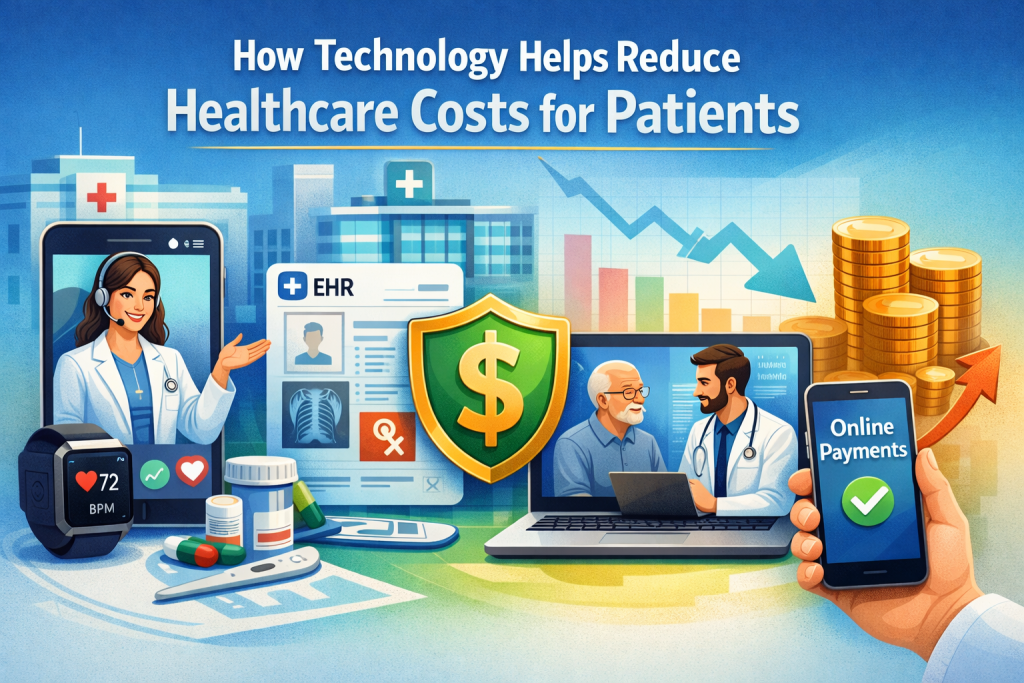
Healthcare… it’s one of those things people don’t think much about—until they have to. And when they do, the reality often hits hard. Rising hospital bills, expensive treatments, long waiting times… it’s overwhelming.
But here’s the interesting part—technology is quietly changing this entire experience.
From booking a doctor online to tracking your health through an app, modern healthcare technology is not just about convenience anymore. It’s about saving money, preventing diseases, and making healthcare accessible for everyone.
This article explores how technology reduces healthcare costs for patients in real, practical ways—not just theory, but everyday impact.
The Rising Cost of Healthcare – A Global Challenge
Let’s be honest—healthcare is expensive. And not just in one country. It’s a global issue.
Hospital stays, surgeries, medications, diagnostics… everything adds up. For many people, even a minor illness can disrupt their finances. And without insurance, it gets worse.
Why are costs rising?
- Advanced medical equipment
- Specialist consultations
- Administrative inefficiencies
- Late diagnosis of diseases
Here’s the problem most people don’t realize: a big portion of healthcare costs comes from inefficiency, not just treatment itself.
That’s where technology steps in.
It doesn’t just treat patients—it optimizes the entire system.
Digital Health Records and Cost Efficiency
Remember when hospitals used paper files? Lost reports, repeated tests, confusion… it was messy.
Now, with electronic health records (EHRs), everything is digitized.
This simple shift does something powerful:
- Reduces duplicate tests
- Prevents medical errors
- Saves time for doctors and patients
- Improves diagnosis accuracy
Let’s say a patient visits two different hospitals. Without digital records, they might repeat the same lab tests—wasting money. With EHRs, doctors can instantly access past data.
Less repetition = lower costs.
It sounds small, but over time, it saves a significant amount.
Online Insurance Platforms and Claims Processing
Insurance used to be confusing. Paperwork, delays, unclear policies…
Now, digital platforms have simplified everything, including systems like Philhealth that make healthcare financing more structured and accessible for patients.
Patients can:
- Compare insurance plans online
- Track claims in real time
- Submit documents digitally
- Get faster approvals
Faster processing means less stress—and fewer unexpected expenses.
Also, transparency helps patients make better financial decisions.
No hidden surprises.
Telemedicine – Affordable Access to Healthcare
This is probably one of the biggest game-changers.
Telemedicine allows patients to consult doctors online—through video calls, chat, or even voice.
No travel. No waiting rooms. No extra expenses.
How does telemedicine reduce healthcare costs?
- Eliminates transportation costs
- Reduces unnecessary hospital visits
- Offers affordable consultation fees
- Provides early diagnosis
Imagine having a minor issue but delaying a visit because it’s “too much hassle.” That delay often leads to bigger problems—and bigger bills.
Telemedicine solves that.
It makes healthcare accessible, immediate, and affordable.
AI and Automation in Healthcare
Artificial Intelligence sounds complicated, but its impact is simple: better decisions, faster processes, lower costs.
AI is being used in:
- Diagnosing diseases
- Predicting health risks
- Automating administrative tasks
- Assisting doctors in treatment plans
Here’s something people often overlook—administrative costs in healthcare are huge.
Billing, scheduling, documentation… these take time and money.
Automation reduces this burden.
And when hospitals save money, patients benefit too—through lower charges and faster services.
Mobile Health Apps and Preventive Care
Let’s talk about something personal—your phone.
Most people already have health apps installed. Step counters, calorie trackers, sleep monitors…
But do they really matter?
Yes. More than you think.
These apps promote preventive healthcare, which is far cheaper than treatment.
- Tracking daily activity prevents lifestyle diseases
- Monitoring diet reduces long-term health risks
- Medication reminders avoid complications
Here’s the truth: treating a disease is expensive. Preventing it? Much cheaper.
Technology shifts focus from reactive care to proactive care.
And that alone can save thousands.
Wearable Technology and Remote Monitoring
Smartwatches, fitness bands, health trackers… they’re not just trendy gadgets anymore.
They’re powerful healthcare tools.
Wearables can monitor:
- Heart rate
- Blood pressure
- Sleep patterns
- Oxygen levels
But here’s where it gets interesting—remote patient monitoring.
Doctors can track patients without requiring hospital visits.
This reduces:
- Frequent check-up costs
- Hospital readmissions
- Emergency situations
For chronic patients, this is a huge relief.
Instead of spending money repeatedly, they can manage their condition from home.
E-Pharmacy and Online Medicine Access
Buying medicines online? That’s another quiet revolution.
E-pharmacies offer:
- Discounted medicine prices
- Home delivery
- Easy price comparison
- Access to generic alternatives
Patients are no longer limited to nearby pharmacies.
They can choose affordable options.
And sometimes, the price difference is significant.
It may not seem like a big saving at first—but over time, it adds up.
Data Analytics and Cost Optimization
This is the behind-the-scenes magic.
Healthcare systems now use data analytics to understand patterns and improve efficiency.
- Predicting disease outbreaks
- Managing hospital resources
- Reducing unnecessary procedures
- Optimizing treatment plans
For example, if hospitals know which treatments are overused or ineffective, they can adjust strategies.
Better decisions = lower costs.
Patients benefit without even realizing it.
Challenges and Limitations of Healthcare Technology
Now, let’s not pretend everything is perfect.
Technology has its own challenges.
- High initial setup costs
- Data privacy concerns
- Digital literacy gaps
- Dependence on internet access
Not everyone is comfortable using apps or online platforms.
And in some regions, infrastructure is still lacking.
Also, over-reliance on technology can sometimes reduce human interaction in healthcare—which still matters.
So yes, technology helps—but it’s not a complete replacement.
It’s a tool, not a solution on its own.
The Future of Technology in Affordable Healthcare
Here’s where things get exciting.
The future of healthcare is becoming:
- More personalized
- More predictive
- More accessible
Technologies like:
- Advanced AI diagnostics
- Virtual hospitals
- Blockchain for medical records
- Smart health ecosystems
…are already developing.
The goal?
Affordable healthcare for everyone.
It won’t happen overnight. But the direction is clear.
Technology is not just improving healthcare—it’s reshaping it.
FAQs
How does technology reduce healthcare costs for patients?
Technology reduces costs by improving efficiency, preventing diseases, minimizing hospital visits, and automating administrative processes.
Can telemedicine really save money?
Yes. It eliminates travel, reduces consultation fees, and enables early diagnosis, which prevents costly treatments later.
Are health apps effective in reducing medical expenses?
They promote preventive care, helping users maintain healthier lifestyles and avoid expensive treatments.
Is AI making healthcare cheaper?
AI reduces costs by improving diagnosis accuracy, reducing errors, and automating repetitive tasks.
Are online pharmacies safe and affordable?
Most licensed platforms are safe and often provide medicines at lower prices compared to traditional pharmacies.
Conclusion
Healthcare costs can feel overwhelming. There’s no denying that.
But technology is changing the story.
Not dramatically overnight—but steadily, quietly, and effectively.
From telemedicine and AI to wearable devices and e-pharmacies, every innovation is pushing healthcare toward one goal:
Making it more affordable for patients.
And maybe that’s the most important shift of all.
Because healthcare shouldn’t be a luxury.
It should be accessible, efficient, and within reach—for everyone.