
For years, most players experienced only what professional companies decided to release. Today, creation tools and open platforms allow individuals and small teams to publish their own Online Games for large communities. These experiences may not always have the biggest budgets or the most realistic graphics, but they often deliver something more valuable: unusual ideas that would struggle to survive inside a cautious studio plan.
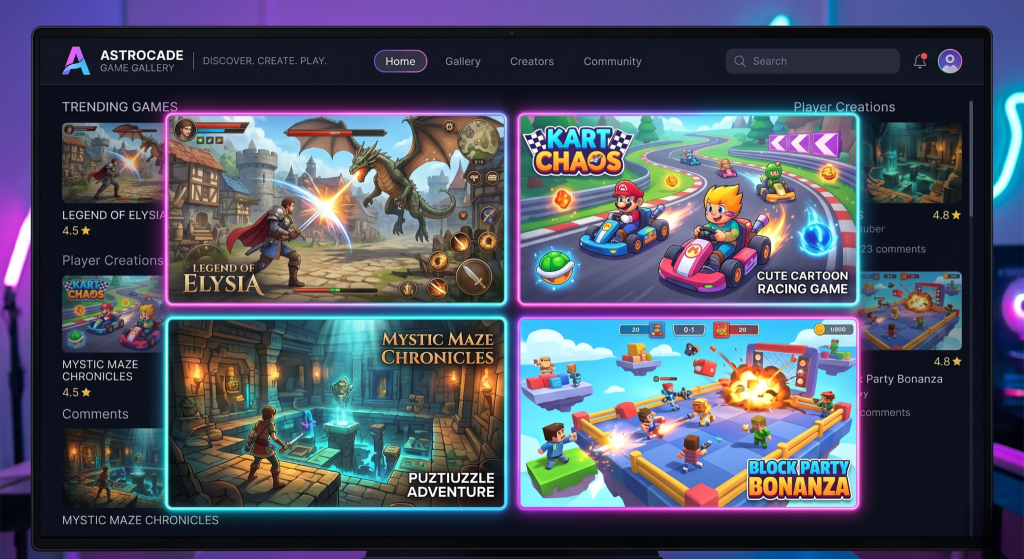
Why Viral Games Often Begin With a Strange Idea
Many Viral games start with a concept that sounds too narrow, silly, risky, or unpredictable for a major publisher. A large studio may need to satisfy investors, recover a huge budget, and appeal to millions of buyers. An independent creator can build for a much smaller audience and explore an idea simply because it sounds entertaining.
A social gaming platform gives that idea somewhere to grow. Players can discover it, invite friends, publish clips, suggest changes, and create new ways to play. The experience can become popular through community excitement rather than a huge advertising campaign.
This does not mean every player-made title is creative or that every studio release is predictable. It means small creators often have more freedom to test ideas without first proving that they can support an expensive commercial launch.
Small Teams Can Follow Curiosity Instead of a Business Formula
Large studios usually plan projects years before release. They must coordinate writers, artists, designers, programmers, marketing teams, legal departments, and platform partners. Changing the central idea halfway through development can waste a great deal of time and money.
Individual creators can move in a different way. They may begin with one mechanic, test it with a few players, and rebuild the project when another direction feels more enjoyable. Casual games are especially suitable for this process because a simple idea can be tested without first producing a huge world.
Player-made projects often stand out through choices like these:
- Combining two genres that are rarely placed together
- Building an entire challenge around one funny interaction
- Creating a role for players that commercial releases usually ignore
- Turning a community joke into a playable objective
- Designing for ten-minute social sessions instead of long campaigns
- Allowing players to invent their own goals inside an open system
- Responding to a trend while it is still fresh
- Keeping an unusual visual style instead of copying realistic graphics
These experiments do not always succeed. However, even an imperfect original idea can feel more memorable than a polished experience that follows a familiar formula.
Players Can Influence Development While It Is Happening
A traditional release may receive patches and extra content, but its central design is usually established long before the public can play it. Creator-led projects are often released earlier and changed more openly.
Players may report confusing controls, suggest new modes, identify boring sections, or discover an unexpected use for a mechanic. A small creator can read this feedback directly and publish a change without waiting for several departments to approve it.
This shorter feedback loop helps explain why creator ecosystems are becoming serious parts of the wider industry. Roblox reported that more than 29,000 developers earned money through its exchange program in the 12 months leading up to the first quarter of 2025. The company also said that 44% of surveyed United States creators would not have made an interactive experience without the platform.
Epic reported in March 2024 that creators had published more than 80,000 islands during the first year of Unreal Editor for Fortnite and that more than $320 million had been paid through engagement payouts during that period. Epic’s current system distributes part of eligible platform revenue according to factors including popularity, engagement, and the ability to attract players.
These systems give creators a reason to continue improving ideas that players genuinely enjoy.
A Physics Playground Built Around Wild Reactions
Kick the Buddy is a physics-based stress game where players interact with a ragdoll character using a collection of weapons and tools. Its entertainment comes from experimenting with objects and watching how the character reacts to different impacts. Ragdoll movement makes the results less rigid because each action can send the character falling, bouncing, or moving in an unexpected direction. The open-ended setup allows players to choose their own actions instead of following one strict path, while the growing selection of tools creates new combinations to test.
How Online Free Games Give Unusual Ideas a Chance
Online Free Games lower the risk of trying something unfamiliar. Players do not need to decide whether a strange idea deserves their money before experiencing it. They can open it, test the central mechanic, and leave when it does not suit them.
This easy entry helps smaller projects compete for attention:
- Players can test an unusual concept without making a purchase.
- Friends can share a link instead of explaining where to buy the title.
- A creator can update the experience without producing a new physical release.
- Short sessions allow people to sample several ideas in one evening.
- Communities can compare different versions after an update.
- New creators can learn from real player behaviour.
- AI games can experiment with generated challenges, dialogue, or changing situations.
- A successful idea can grow gradually instead of launching as a finished blockbuster.
Free access does not guarantee quality. Some projects contain too many advertisements, copy popular ideas, or use unfair reward systems. The advantage is not that every free experience is good. It is that unusual creators have a clearer path to finding the people who may appreciate their work.
Rough Edges Can Make an Experience Feel More Human
Studio productions often aim for consistency. Every menu, animation, sound, and instruction is reviewed so the finished product feels complete. That level of polish can be impressive, but it may also remove some of the surprising details that give smaller projects personality.
Player-made experiences sometimes contain unusual animations, unexpected physics, simple artwork, or rules that initially seem confusing. These weaknesses should not be excused when they prevent fair play. Yet a rough detail can also become part of the experience’s identity when it creates humour or allows an action the creator never planned.
The difference is intention. Broken controls, lost progress, and misleading systems damage trust. Harmless unpredictability can create stories. Players may remember the strange shortcut that worked, the object that flew across the map, or the strategy that emerged from an accidental interaction.
Major companies usually try to reduce this uncertainty because their products must work reliably for a broad audience. Smaller creators can sometimes allow the community to explore it.
Why Communities Make Player-Made Worlds Feel Alive
A completed studio campaign usually has a clear boundary. You follow its story, master its challenges, and eventually reach the end. A community-led experience can continue changing because its audience becomes part of its identity.
Players create guides, challenges, jokes, competitions, role-play rules, and new uses for existing systems. They may treat one map as a serious competition while another group uses the same space for relaxed social play. When people play with friends online, the fun may come as much from shared behaviour as from the original rules.
Creators can also react to the culture forming around their work. A popular player challenge may become an official mode. A minor character may receive a bigger role because the community likes it. A difficult movement technique may remain in place because skilled players build competitions around it.
Roblox has continued investing in what it calls novel games, including projects with different genres, mechanics, and visual styles. In March 2026, the company announced support programs designed to help creators develop more ambitious role-playing, strategy, and shooting experiences.
This shows how the line between a small community project and a professional production is becoming less clear. Some creator-made experiences now involve organised teams and serious budgets while keeping the fast, community-led thinking that helped them begin.
How to Find Original Work Without Getting Lost in Copies
Open creation platforms produce enormous variety, but they also produce repetition. Once one idea becomes popular, many similar titles may appear. A familiar thumbnail or trending word does not prove that an experience offers anything new.
Read the description and recent update notes before entering. Look for a clear explanation of the central activity. Check whether players discuss meaningful features or only complain about technical problems and misleading rewards. A long visit count can show popularity, but it cannot tell you whether the experience matches your interests.
After entering, judge the first session through a few simple questions. Did the game introduce an idea you had not seen before? Did your decisions affect the outcome? Did you discover a skill worth improving? Was there a reason to return beyond collecting a daily reward?
You can also explore the creator’s profile. Someone who publishes several unrelated copies may be chasing trends, while a creator who updates one focused project may be building a clear vision. Neither pattern proves quality, but it gives you more information than a promotional image alone.
Studio titles still offer strengths that smaller teams may struggle to match. They can deliver detailed worlds, professional performances, advanced accessibility options, long-term technical support, and carefully balanced systems. Player-made work is not automatically better.
Its special strength is closeness. The distance between the person with the idea and the people playing it is smaller. Creators can take unusual risks, communities can influence development, and a tiny experiment can become something far larger than originally planned. That shared growth can make the result feel personal in a way that even an expensive production may not copy.
An Online game No Download experience makes this creative world even easier to explore. You can move from a strange recommendation to active play in moments, judge the idea for yourself, and discover games built around interests that a major studio may never consider large enough to serve.